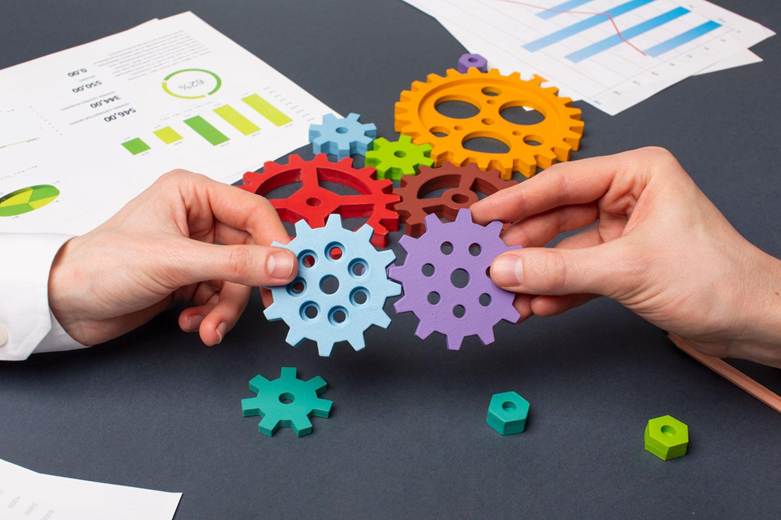
In conversations about organizational performance and sustainable growth, Andrew Ticknor has increasingly emphasized that the most transformative business improvements rarely come from sweeping overhauls or dramatic restructuring. Instead, lasting operational excellence is often built through dozens, or even hundreds, of small refinements that gradually improve how people, processes, and systems work together. While individual improvements may appear insignificant in isolation, their cumulative impact can fundamentally reshape an organization’s long-term performance.
Business leaders are naturally drawn to large-scale initiatives.
Major technology implementations, strategic reorganizations, and ambitious transformation projects often receive significant attention because they promise visible results. These initiatives certainly have their place, but they are not the only path to meaningful progress. Many organizations overlook the quiet improvements taking place every day, small adjustments that simplify work, reduce friction, and help teams perform more effectively.
Over time, these seemingly modest changes begin reinforcing one another. What starts as a minor operational improvement can eventually influence productivity, customer satisfaction, employee engagement, and organizational agility in ways that far exceed the original investment.
Small Improvements Create Momentum
One reason incremental improvements are so powerful is that they are easier to sustain than dramatic organizational change.
Large transformations often require substantial budgets, months of planning, and significant disruption to daily operations. Smaller improvements, by contrast, can usually be implemented more quickly while allowing employees to continue performing their responsibilities with minimal interruption.
Examples might include:
- Simplifying an approval process.
- Standardizing documentation.
- Improving meeting agendas.
- Clarifying decision ownership.
- Eliminating redundant administrative tasks.
- Refining communication workflows.
Individually, these adjustments may save only a few minutes or reduce occasional confusion. Collectively, however, they create an environment where work flows more smoothly and employees spend more time creating value instead of navigating unnecessary complexity.
Operational Friction Often Accumulates Quietly
Organizations rarely become inefficient because of one major problem. More often, inefficiencies develop through the gradual accumulation of small obstacles.
- A report requires one additional approval.
- A meeting becomes slightly longer.
- A process gains another review step.
- A software platform introduces duplicate data entry.
None of these changes appears particularly significant on its own.
Over months and years, however, they compound into operational friction that slows execution across the organization.
The encouraging reality is that improvements compound in exactly the same way.
Removing dozens of small inefficiencies frequently produces greater long-term gains than solving a single large problem.
The Psychology Behind Incremental Progress
Small improvements also influence organizational behavior.
When employees see practical changes being implemented regularly, they become more engaged in identifying opportunities for further improvement. Progress begins feeling achievable rather than dependent on large executive initiatives.
This creates a culture where continuous observation becomes part of daily work rather than an annual exercise.
Employees start asking practical questions such as:
- Is there a simpler way to complete this task?
- Can this process be shortened?
- Does this approval still create value?
- Could better documentation eliminate recurring questions?
These conversations encourage operational ownership throughout the organization instead of concentrating improvement efforts within leadership alone.
Why Consistency Matters More Than Intensity
Organizations sometimes approach improvement with bursts of enthusiasm followed by long periods of inactivity.
This pattern often produces inconsistent results.
Operational excellence is generally built through consistency rather than intensity.
A business that improves one process every week for several years may ultimately outperform another organization that launches occasional large-scale transformation projects but rarely revisits day-to-day operations.
The principle is remarkably similar to long-term investment.
Small gains continue building upon previous gains, creating momentum that becomes increasingly valuable over time.
Measuring Progress Beyond Major Milestones
Many organizations evaluate success primarily through major accomplishments.
- New product launches.
- Expansion into new markets.
- Technology implementations.
- Revenue growth.
While these milestones remain important, they often reflect the cumulative impact of countless operational improvements made long before the milestone itself became visible.
Leaders should also pay attention to indicators such as:
- Faster decision-making.
- Reduced rework.
- Improved knowledge sharing.
- Shorter onboarding periods.
- More efficient collaboration.
- Fewer recurring operational issues.
These improvements may not generate headlines, but they strengthen the organization’s ability to execute consistently.
Building Systems That Encourage Continuous Refinement
Continuous improvement does not happen by accident.
Organizations that consistently improve their operations usually establish systems that encourage employees to identify opportunities for refinement.
This often includes:
- Regular process reviews.
- Cross-functional feedback.
- Lessons learned after major projects.
- Open discussion about recurring challenges.
- Recognition for practical improvement ideas.
Importantly, these conversations focus on improving systems rather than assigning blame.
Employees become more willing to share observations when they know the objective is organizational learning rather than individual criticism.
The Leadership Role in Operational Excellence
Leadership plays an essential role in determining whether continuous improvement becomes part of organizational culture.
Rather than waiting for major challenges to emerge, effective leaders encourage ongoing curiosity about how work can be performed more effectively.
This involves asking thoughtful questions instead of assuming current processes represent permanent solutions.
Leaders who regularly seek employee feedback often discover opportunities that formal reports never reveal.
Frontline teams interact with operational systems every day and are frequently the first to recognize unnecessary complexity, repeated frustrations, or opportunities for simplification.
Creating space for these perspectives strengthens both operational performance and employee engagement.
Small Changes Often Produce Strategic Advantages
Incremental improvements may appear tactical, but their cumulative impact is often strategic.
- Organizations that consistently reduce friction become more agile.
- They respond to customer needs more quickly.
- They adapt more easily to changing market conditions.
Employees spend less time overcoming avoidable obstacles and more time focusing on innovation, service, and problem-solving.
Perhaps most importantly, organizations become better prepared for future growth because their operational foundations continue improving alongside their strategic ambitions.
Conclusion
Sustainable organizational excellence is rarely the result of one transformational initiative. More often, it emerges from a consistent commitment to improving everyday operations in thoughtful, practical ways. Small refinements to processes, communication, decision-making, and collaboration may appear modest individually, but together they create stronger systems that support long-term performance.
The compound effect of operational improvement reminds leaders that progress does not always require dramatic change. Organizations that continuously remove friction, encourage learning, and refine the way work gets done often discover that the greatest competitive advantages are built gradually, one improvement at a time.